Disclaimer: The information in this article is for educational purposes only and does not constitute medical advice. Always consult a qualified healthcare professional before making changes to your health regimen.
Advertising disclosure: This article contains affiliate links. If you buy through them, Biohacker Alliance may earn a commission at no extra cost to you. Quicksilver Scientific is an official partner of Biohacker Alliance. Our editorial assessment is independent.
By the Biohacker Alliance editorial team · Last updated October 2026
Quick answer: A good liposomal glutathione lists the exact amount of reduced glutathione (GSH) per serving, names its phospholipid source, keeps additives short and comes from a company that publishes third-party testing. Research on oral glutathione is still early: a few small human studies show that blood glutathione levels can rise with daily intake, but there is no proof yet that this translates into specific health outcomes.
What is glutathione?
Glutathione is a small molecule made of three amino acids: glutamate, cysteine and glycine. Your body produces it itself, and it is found in almost every cell. It plays a central role in the body's antioxidant system and in many metabolic processes in the liver.
Glutathione exists in two forms. Reduced glutathione (GSH) is the active form. Oxidized glutathione (GSSG) is what remains after it has done its work. The ratio between the two is often used in research as a marker of oxidative stress.
Why "liposomal"?
Glutathione is a peptide, and for a long time it was assumed that it is largely broken down in the digestive tract before it can be absorbed. Liposomal products wrap glutathione in tiny bubbles of phospholipids (usually phosphatidylcholine from sunflower or soy lecithin). The idea is to protect the molecule on its way through the gut.
Whether liposomal glutathione is absorbed better than a good standard capsule has not been settled by head-to-head studies in humans. What we can say: both forms have been tested in small human studies, and both raised glutathione levels in the blood (see below).
What do studies on oral glutathione show?
| Study | Design | Dose and duration | Main findings |
|---|---|---|---|
| Richie et al., 2015, European Journal of Nutrition | Randomized, double-blind, placebo-controlled, 54 healthy adults | 250 or 1,000 mg/day standard glutathione, 6 months | Glutathione in blood cells rose by about 30–35% at the higher dose; levels returned to baseline after stopping |
| Sinha et al., 2018, European Journal of Clinical Nutrition | Pilot study without placebo, 12 adults aged 51–72 | 500 or 1,000 mg/day liposomal glutathione, 4 weeks | Whole-blood glutathione up to about 40% higher after 2 weeks; some oxidative stress markers lower; funded by the manufacturer |
| Allen & Bradley, 2011, J Altern Complement Med | Randomized, placebo-controlled, 40 adults | 1,000 mg/day standard glutathione, 4 weeks | No significant change in oxidative stress markers or glutathione status |
How to read this: The results are mixed and the studies are small. Longer studies tended to show clearer increases than short ones. None of these studies tested whether glutathione supplements prevent or treat any disease, and they should not be read that way.
How to choose a liposomal glutathione: 7 criteria
- Amount per serving. Look for the exact milligrams of glutathione per serving, not only a "proprietary blend". Studies used 250–1,000 mg per day.
- Reduced glutathione (GSH). The label should say "reduced glutathione" or name a branded ingredient such as Opitac™ or Setria®.
- Phospholipid source. Sunflower lecithin is a common choice for people who avoid soy.
- Short ingredient list. Check for sugar, artificial flavors and alcohol. Many liquid liposomal products contain a small amount of ethanol as a preservative.
- Taste and form. Glutathione naturally smells of sulfur. Flavored liquids, sprays or capsules make daily use easier.
- Testing and transparency. Prefer brands that name their manufacturing standards and publish or share test results.
- Price per serving. Compare the cost per 100 mg of glutathione, not the bottle price.
What affects your glutathione levels?
Your body makes glutathione from three amino acids, and several everyday factors influence how much is available:
- Age: several studies report lower glutathione levels in older adults than in younger ones.
- Smoking and heavy alcohol use: both are linked to higher oxidative stress and lower glutathione in research.
- Certain medications: an overdose of paracetamol (acetaminophen) uses up glutathione in the liver, which is why it is dangerous. At normal doses this is not a concern.
- Building blocks: cysteine is usually the limiting amino acid. It comes from protein-rich foods such as eggs, poultry, fish, legumes and dairy.
- Cofactors: the enzyme that uses glutathione to neutralize peroxides needs selenium. Selenium contributes to the protection of cells from oxidative stress, and brazil nuts, fish and eggs are good sources.
Glutathione in food
Some foods contain glutathione directly, for example asparagus, avocado, spinach and okra. How much of this survives digestion is unclear, and cooking reduces it. A more reliable approach is to eat enough protein for cysteine and plenty of sulfur-rich vegetables such as broccoli, cabbage, garlic and onions as part of a varied diet.
A supplement does not replace these basics. If you smoke, sleep badly or eat little protein, those are the first things to change.
Liposomal vs. capsules vs. NAC
| Option | What it is | Points to consider |
|---|---|---|
| Liposomal glutathione (liquid) | Glutathione in phospholipid vesicles | Flexible dosing, usually taken on an empty stomach; taste and shelf life after opening vary |
| Standard glutathione capsules | Reduced glutathione powder | Easy to take; used in the longest placebo-controlled study (Richie 2015) |
| NAC (N-acetylcysteine) | A precursor that supplies cysteine for the body's own glutathione production | Widely studied; in some countries NAC is regulated as a medicine, not a supplement |
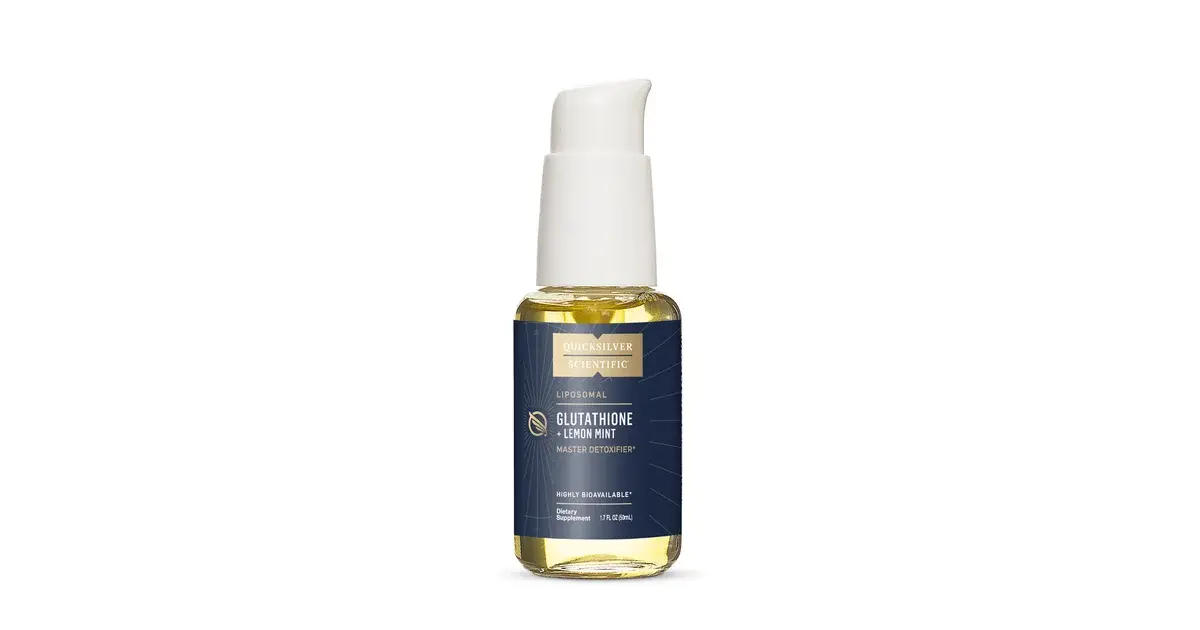
Our pick: Quicksilver Scientific Liposomal Glutathione
Quicksilver Scientific is a Colorado-based company founded in 2006 by chemist Dr. Christopher Shade, PhD. Its products are sold mainly through practitioners and are known for liquid liposomal formulas.
Recommended Products
Top-rated nutrition & supplements supplements & tools on amazon.de
Omega-3 High-Dose
Heart & brain health
View on amazon.de
Vitamin D3 + K2
Immunity & bone support
View on amazon.de
Magnesium Glycinate
Cellular energy & relaxation
View on amazon.de
* Affiliate links — Biohacker Alliance earns a small commission at no extra cost to you. Products shown are selected for relevance to Nutrition & Supplements.
| Detail | Quicksilver Scientific Liposomal Glutathione |
|---|---|
| Glutathione per serving | 100 mg reduced glutathione (Opitac™) per 1 mL (2 pumps) |
| Phospholipids | 75 mg phosphatidylcholine from sunflower lecithin |
| Bottle size | 50 mL (about 50 servings) |
| Flavor | Lemon mint |
| Other ingredients | Water, glycerin, ethanol, vitamin E, natural citrus and mint oils |
| Label directions | 2 pumps twice daily, held in the mouth for 30 seconds, at least 10 minutes before meals; use within 30 days of opening |
Why we chose it: clear dose per serving, a named reduced-glutathione ingredient, sunflower-based phospholipids, a short ingredient list and a practitioner-focused brand.
Keep in mind: it contains a small amount of ethanol, it should be used within 30 days of opening, and 100 mg per serving is lower than the doses used in the studies above.
Check price at Quicksilver Scientific →
How to take liposomal glutathione
- Follow the label dose. For the Quicksilver product this is 2 pumps twice daily. Do not exceed the label dose without talking to a doctor.
- Take it on an empty stomach, usually at least 10 minutes before a meal.
- Hold it in your mouth for about 30 seconds before swallowing if the label says so.
- Mix with a little water or juice if you dislike the taste. Glutathione naturally has a slight sulfur note.
- Store it correctly. Close the bottle after use, keep it away from heat and use it within the period stated on the label (30 days after opening for Quicksilver).
- Track how you feel and, if you work with a practitioner, ask whether a blood test makes sense before and after a few months.
How to compare price per serving
Bottle prices say little because products differ in dose and size. Use this simple calculation:
Price per 100 mg = bottle price ÷ (mg glutathione per serving × servings per bottle) × 100
Example with made-up numbers: a bottle costs 60 dollars and contains 50 servings of 100 mg. That is 5,000 mg in total, so 100 mg cost 1.20 dollars. Run the same numbers for every product you compare, and check the current price on the shop page.
Common mistakes
- Buying on marketing words like "ultra-absorbable" instead of checking the dose per serving.
- Comparing bottle prices instead of price per 100 mg.
- Expecting quick, noticeable effects. Studies measured blood levels over weeks to months, not how people felt.
- Ignoring storage instructions. Liquid liposomal products can degrade after opening.
- Skipping the basics: sleep, protein intake, not smoking and limited alcohol matter more than any single supplement.
Safety
In the studies above, oral glutathione was generally well tolerated over periods of up to six months. Long-term safety data are limited. Talk to a doctor before use if you are pregnant or breastfeeding, take medication, have a chronic condition or have asthma.
Want personal advice? Find a functional medicine or longevity expert near you.
Related reading
This article is for information only and does not replace medical advice.
Sources
- Richie JP Jr et al. Randomized controlled trial of oral glutathione supplementation on body stores of glutathione. Eur J Nutr. 2015. https://pubmed.ncbi.nlm.nih.gov/24791752/
- Sinha R et al. Oral supplementation with liposomal glutathione elevates body stores of glutathione and markers of immune function. Eur J Clin Nutr. 2018. https://pmc.ncbi.nlm.nih.gov/articles/PMC6389332/
- Allen J, Bradley RD. Effects of oral glutathione supplementation on systemic oxidative stress biomarkers in human volunteers. J Altern Complement Med. 2011. https://pubmed.ncbi.nlm.nih.gov/21875351/
Frequently Asked Questions
Is liposomal glutathione better than regular glutathione?+
How much glutathione do studies use?+
When should I take liposomal glutathione?+
How long does it take to see a change in blood levels?+
Is glutathione the same as NAC?+
Can I take glutathione together with vitamin C?+
Does glutathione lighten the skin?+
Is liposomal glutathione suitable for vegetarians?+
Disclaimer: The information in this article is for educational purposes only and does not constitute medical advice. Always consult a qualified healthcare professional before making changes to your health regimen.