Disclaimer: The information in this article is for educational purposes only and does not constitute medical advice. Always consult a qualified healthcare professional before making changes to your health regimen.
Advertising disclosure: This article contains affiliate links. If you buy through them, Biohacker Alliance may earn a commission at no extra cost to you. Quicksilver Scientific is an official partner of Biohacker Alliance. Our editorial assessment is independent.
Quick answer: Liposomal supplements pack a nutrient into tiny fat-like bubbles called liposomes. For vitamin C, several small human studies found higher blood levels than with the same dose of regular vitamin C. For most other nutrients, good human data are still missing. Liposomal is a reasonable choice if you want higher doses that are easier on the stomach, but it is not automatically better for every nutrient.
What is a liposome?
A liposome is a microscopic bubble with a shell made of phospholipids, the same type of molecule that forms the membranes of your own cells. Water-soluble nutrients sit inside the bubble, fat-soluble ones are built into the shell. Most supplement liposomes use phosphatidylcholine from sunflower or soy lecithin.
Liposomes were first developed for medicine, where they are used to deliver certain drugs. Supplement makers adopted the technology to protect sensitive nutrients and to change how they are absorbed.
How are liposomal supplements supposed to work?
The idea has three parts:
- Protection: the shell shields the nutrient from stomach acid and enzymes.
- Different uptake: liposomes may be absorbed through other routes in the gut than the free nutrient.
- Slower release: the nutrient reaches the blood more gradually, so levels stay elevated longer.
How much of this happens in practice depends on the product: particle size, stability, phospholipid quality and storage all matter. Two products labeled "liposomal" can behave very differently.
Liposomal vs. regular vitamin C: what human studies show
Vitamin C is the best-studied liposomal nutrient. A review by the UK Committee on Toxicity summarized the human data (COT, case study liposomal vitamin C):
| Study | Participants | Dose | Result vs. regular vitamin C |
|---|---|---|---|
| Davis et al., 2016 | 11 adults | 4 g | About 1.4-fold higher blood exposure over 4 hours (PMC) |
| Łukawski et al., 2020 | 20 adults, 2 groups | 10 g | Higher peak level (303 vs. 180 µM), longer half-life (over 6 vs. 4 hours) |
| Gopi & Balakrishnan, 2021 | 24 adults, crossover | 1 g | Higher peak level (5.2 vs. 1.2 mg/dL) and about 1.8-fold higher exposure over 24 hours |
How to read this: All three studies point in the same direction, but they are small and used different products and doses. The committee's own conclusion is cautious: liposomal vitamin C "appears to increase oral bioavailability". Higher blood levels do not by themselves prove a better health effect.
What is established: Vitamin C contributes to the normal function of the immune system and to normal collagen formation for the normal function of the skin. This applies to vitamin C in any form, liposomal or not.
Liposomal vs. other "enhanced absorption" forms
Liposomes are not the only technology that promises better uptake. Labels often use similar-sounding terms for different things:
| Term | What it means | Typical use |
|---|---|---|
| Liposome | A bubble with a double phospholipid shell around a water core | Vitamin C, glutathione |
| Micelle | A single layer of emulsifier around an oil droplet | Fat-soluble nutrients such as vitamin D, curcumin, CoQ10 |
| Nanoemulsion | Very small oil droplets dispersed in water | Fat-soluble nutrients, CBD, curcumin |
| Phytosome | A nutrient bound directly to phospholipids | Plant compounds such as curcumin or milk thistle |
Each approach has its own small studies, mostly for single products. A claim proven for one product does not automatically apply to another product using the same word.
Liposomal vitamin C vs. ascorbic acid
Regular vitamin C supplements usually contain ascorbic acid or a buffered salt such as sodium ascorbate. Ascorbic acid is cheap, well studied and absorbed well at normal doses. The body's uptake system becomes saturated at higher single doses, so a larger share of a big dose is simply excreted.
This is where liposomal forms are said to help: in the studies above they produced higher blood levels at gram doses. At everyday doses of 100–500 mg the practical difference is likely small, so plain ascorbic acid remains a reasonable and inexpensive choice for most people.
How to take liposomal vitamin C
- Start with the label dose and spread larger amounts over the day.
- Mix it with a little water or juice if you dislike the taste of the liquid.
- Take it with or without food as the label says; most liquids can be taken either way.
- Store it as directed, often in the fridge after opening, and use it within the stated time.
- Watch your digestion: loose stools are a sign that the dose is too high for you.
Who might choose liposomal?
- People who take higher doses and get stomach upset from regular vitamin C. Buffered forms such as sodium ascorbate in a liposome are often better tolerated.
- People who prefer liquids over large tablets.
- People who want a nutrient that is poorly absorbed on its own, such as glutathione. See our guide to choosing a liposomal glutathione.
Liposomal is usually not needed if you only want the daily reference amount of vitamin C (80 mg in the EU, 75–90 mg in the US), which a normal diet or a simple tablet covers easily.
Is liposomal worth it? A nutrient-by-nutrient view
| Nutrient | Absorbed well in regular form? | Does liposomal add much? |
|---|---|---|
| Vitamin C | Yes, at normal doses | Possibly at gram doses (small studies) |
| Glutathione | Debated | Plausible, but no head-to-head human studies |
| Vitamin D3 | Yes, especially with a meal containing fat | Little reason for most people |
| Magnesium | Depends on the salt (citrate and glycinate are well absorbed) | Little human data |
| Curcumin | Poorly absorbed on its own | Enhanced forms of several kinds show higher blood levels in small studies |
| CoQ10 | Moderately, better with fat | Several enhanced forms exist; data vary by product |
Our rule of thumb: liposomal makes the most sense for nutrients that are poorly absorbed or poorly tolerated in their regular form, or when you take doses well above everyday amounts. For well-absorbed nutrients at normal doses, regular forms are usually just as good and cheaper.
Recommended Products
Top-rated nutrition & supplements supplements & tools on amazon.de
Omega-3 High-Dose
Heart & brain health
View on amazon.de
Vitamin D3 + K2
Immunity & bone support
View on amazon.de
Magnesium Glycinate
Cellular energy & relaxation
View on amazon.de
* Affiliate links — Biohacker Alliance earns a small commission at no extra cost to you. Products shown are selected for relevance to Nutrition & Supplements.
How to spot a good liposomal product
- Dose per serving is stated clearly for each active ingredient.
- Phospholipid source is named (for example sunflower phosphatidylcholine).
- Form: liquids and gels are typical; "liposomal" capsules exist, but check how they are made.
- Additives: check for sugar, flavors and preservatives such as ethanol.
- Storage: many liquids need refrigeration or must be used within a set time after opening.
- Transparency: the brand explains its manufacturing and testing.
- Price per dose: liposomal products cost more, so compare cost per 1,000 mg (vitamin C) or per 100 mg (glutathione).
Quicksilver Scientific liposomal products
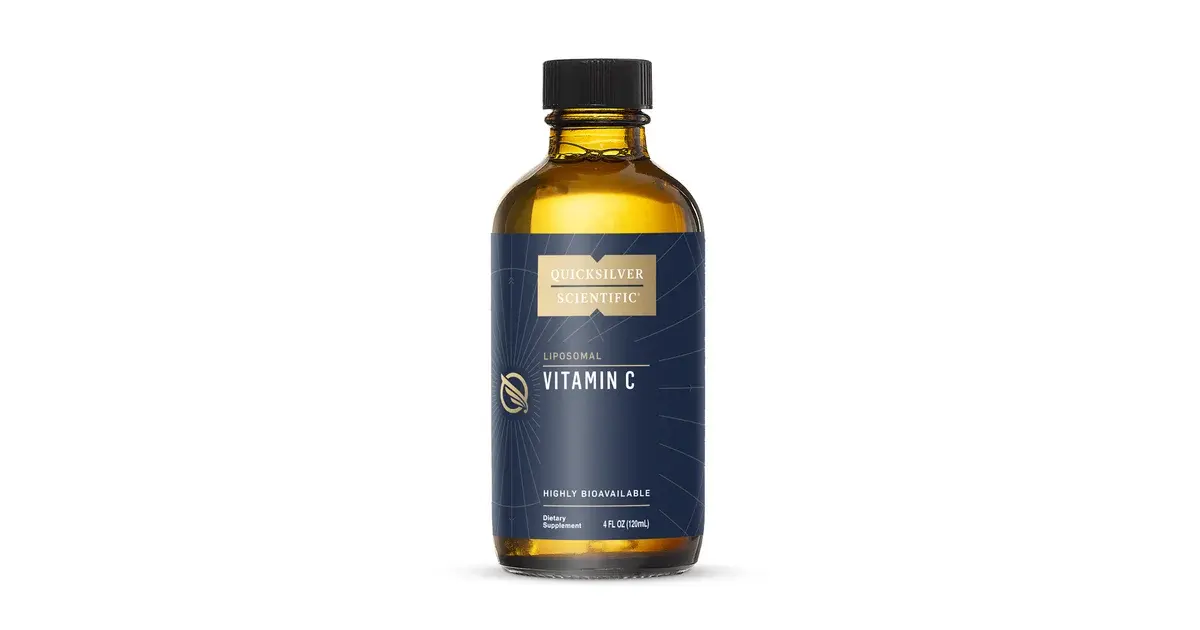
Quicksilver Scientific, founded in 2006 by chemist Dr. Christopher Shade, PhD, specializes in liquid liposomal and nanoemulsified formulas sold mainly through practitioners. Two of its best-known products:
| Product | Per serving | Notes |
|---|---|---|
| Liposomal Vitamin C | 1,000 mg vitamin C (as sodium ascorbate) per 5 mL; 125 mg sodium | Liquid, taken by the teaspoon; 120 mL (24 servings); refrigerate after opening; contains ethanol |
| Liposomal Glutathione | 100 mg reduced glutathione (Opitac™) per 1 mL; 75 mg phosphatidylcholine | Lemon mint, use within 30 days of opening |
View Liposomal Vitamin C → · View Liposomal Glutathione →
Liposomal vitamin C side effects
Side effects are usually the same as with regular vitamin C and mostly appear at high doses: loose stools, cramps or nausea. Because many liquid products use sodium ascorbate, a daily dose can add a noticeable amount of sodium. People with a history of kidney stones should be careful with high doses of any vitamin C, as it can increase oxalate in the urine. Phospholipids from soy lecithin can be a problem for people with soy allergy; sunflower-based products avoid this.
Safety
Liposomal supplements are generally well tolerated at label doses. Very high vitamin C intakes can cause digestive upset; the EU has not set an upper limit, the US sets it at 2,000 mg per day for adults. Talk to your doctor first if you have kidney stones, iron overload (hemochromatosis), are pregnant or take medication. Note the sodium content of sodium ascorbate if you limit salt.
Looking for personal guidance? Find a functional medicine or longevity expert.
This article is for information only and does not replace medical advice.
Sources
- UK Committee on Toxicity: Case study 1, liposomal vitamin C. https://cot.food.gov.uk/Case%20study%201:%20Liposomal%20vitamin%20C
- Davis JL et al. Liposomal-encapsulated ascorbic acid: influence on vitamin C bioavailability and capacity to protect against ischemia–reperfusion injury. Nutr Metab Insights. 2016. https://pmc.ncbi.nlm.nih.gov/articles/PMC4915787
- Łukawski M et al. New oral liposomal vitamin C formulation: properties and bioavailability. J Liposome Res. 2020. https://pubmed.ncbi.nlm.nih.gov/31264495/
- Gopi S, Balakrishnan P. Evaluation and clinical comparison studies on liposomal and non-liposomal ascorbic acid and their enhanced bioavailability. J Liposome Res. 2021. https://pubmed.ncbi.nlm.nih.gov/32901526/
Frequently Asked Questions
Is liposomal vitamin C better than regular vitamin C?+
Are all liposomal supplements the same?+
Do liposomal supplements need to be refrigerated?+
Can I make liposomal vitamin C at home?+
Which nutrients are offered in liposomal form?+
Does liposomal vitamin C need to be taken on an empty stomach?+
How much liposomal vitamin C per day?+
Disclaimer: The information in this article is for educational purposes only and does not constitute medical advice. Always consult a qualified healthcare professional before making changes to your health regimen.